Curcumin (Turmeric): Anti-Inflammatory Compound with Wide Health Benefits
Safety Interaction Check
Check if Curcumin interacts with your current medications.
Well-established cause of liver injury , same active compound as Turmeric
Informational, not a directive. Always confirm with your clinician.
- Curcumin is the yellow pigment in turmeric and its primary active compound. It has real anti-inflammatory activity , it blocks NF-κB and COX-2.
- The central problem: curcumin is barely absorbed unless paired with piperine (black pepper extract) or fat. Without these, you excrete most of what you pay for.
- Joint pain studies show modest benefit with enhanced-absorption formulations. Standard turmeric powder does almost nothing.
- LiverTox score A , curcumin is a well established cause of liver injury in susceptible individuals. Cases are rare but not theoretical.
- Doses in trials: 500–2,000 mg/day of curcumin extract, ideally with piperine or lipid delivery technology.
Liver Safety Alert: Curcumin (Turmeric)
Curcumin (Turmeric) has been associated with liver injury in clinical reports. The NIH LiverTox database classifies it as: Well-established cause of liver injury (Category A). Consult your healthcare provider before use, especially if you have liver conditions, take other medications metabolized by the liver, or consume alcohol regularly.
What Is Curcumin?
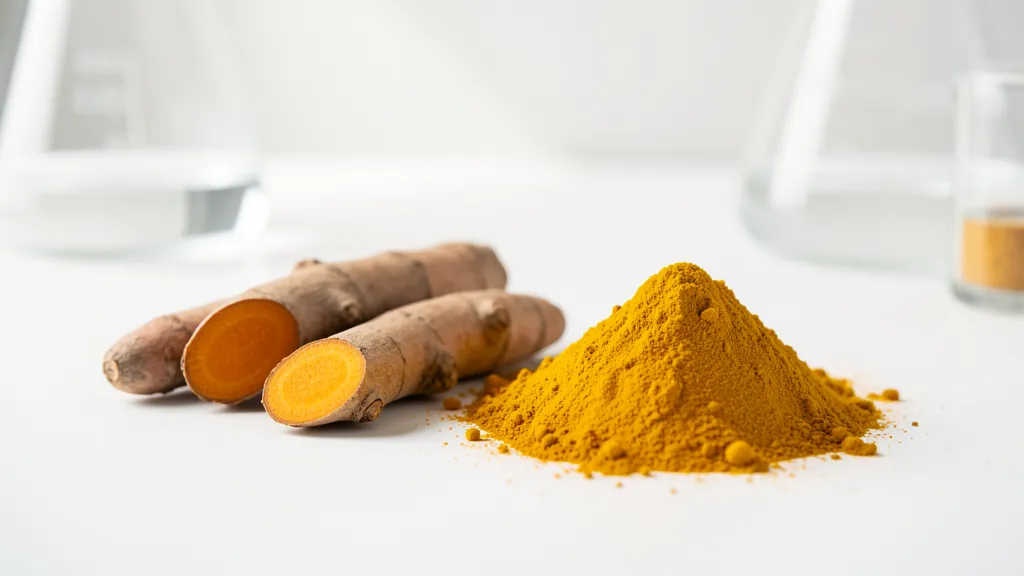
Curcumin is a polyphenol , a yellow-orange pigment , extracted from turmeric, the dried rhizome of the Curcuma longa plant. It gives the spice its color. It also drives most of turmeric’s biological effects.
Turmeric has been a staple of Ayurvedic and traditional Chinese medicine for thousands of years, used for wounds, digestive problems, and joint pain. Modern chemistry has since identified curcumin as the molecule behind many of those traditional applications. But identifying a compound and proving it works in humans are different things. The evidence is uneven, and some claims get ahead of the data.
Anti-Inflammatory Effects
Curcumin blocks NF-κB, a protein complex that sits at the center of the inflammatory cascade. When NF-κB is active, cells release cytokines and other pro-inflammatory signals. Curcumin suppresses this activation. This mechanism is solid , it shows up consistently in cell studies and animal models [1].
Does this translate to humans? Partly. In people with metabolic syndrome or osteoarthritis, curcumin does lower inflammatory markers like CRP. But the effect size jumps around. Some trials show a clear drop. Others show nothing. The difference almost always traces back to bioavailability, which is the real story with this compound.
Curcumin also inhibits COX-2 and LOX enzymes , the same targets that ibuprofen and other NSAIDs hit, though by different mechanisms and with less potency. This overlap explains why some trials find curcumin roughly comparable to ibuprofen for joint pain, but with less stomach irritation.
Antioxidant Activity
Curcumin neutralizes free radicals directly and upregulates the body’s own antioxidant enzymes , glutathione peroxidase, superoxide dismutase, and catalase [2]. In cell cultures, this dual action looks impressive. In living humans, the antioxidant signal is harder to detect. Some studies find reduced oxidative stress markers. Others find no change. Once again, how much curcumin actually reaches your bloodstream determines whether anything happens.
Joint Health: Evidence Is Modest
People take curcumin hoping it will ease joint pain, and the mechanistic case is reasonable. Joint degeneration involves chronic inflammation. Curcumin blocks inflammatory pathways. So it ought to help.
A handful of randomized trials do report that curcumin reduces knee pain and stiffness in osteoarthritis , sometimes matching the effect of ibuprofen with fewer gastrointestinal side effects [3]. But other trials show no difference from placebo. The trials that lean positive almost always use enhanced-absorption formulations. Standard turmeric powder does almost nothing for joint pain in most studies.
If joint relief is your goal, use a bioavailable curcumin product and keep expectations grounded. This is a modest adjunct , not a replacement for established treatments. The people who benefit most tend to have mild to moderate symptoms and use it consistently for at least eight weeks.
Bioavailability matters
If you are using curcumin for joint pain, you need an enhanced-absorption formulation , piperine, liposomal, or phospholipid complex. Plain turmeric powder or standard curcumin extract is mostly excreted. Give it 8+ weeks before deciding if it helps.
The Bioavailability Problem
Here is the central fact about curcumin that supplement labels prefer to ignore: your body is terrible at absorbing it. Curcumin is poorly soluble in water, unstable at the pH of your small intestine, and rapidly metabolized by the liver. Most of what you swallow is excreted before it ever reaches your bloodstream.
Three approaches actually fix this:
- Piperine. A compound from black pepper that inhibits the liver enzymes (glucuronidation) responsible for breaking down curcumin. Adding just 20 mg of piperine can increase curcumin absorption twentyfold.
- Fat. Curcumin is fat-soluble. Taking it alongside a meal that contains oil or dietary fat sharply improves how much enters circulation.
- Formulation technology. Liposomal encapsulation, nanoparticle delivery, and phospholipid complexes (like Meriva®) all produce higher blood levels than plain curcumin powder. These products cost more, but they are the only versions that reliably show effects in clinical trials.
Without one of these strategies, you are paying for expensive urine.
Cardiovascular Effects
Curcumin improves endothelial function , the ability of blood vessels to relax and dilate , in several small human trials. It also reduces LDL oxidation and some inflammatory markers associated with atherosclerosis [4]. These effects are real but small. Curcumin is a background contributor to vascular health, not a frontline intervention. Do not substitute it for blood pressure medication or a statin.
Safety Information
Curcumin inhibits platelet aggregation, which can amplify the effects of blood-thinning medications (warfarin, aspirin, clopidogrel). It has also caused liver injury in a small number of reported cases , if you notice dark urine, jaundice, or unusual fatigue while supplementing, stop and get liver enzymes checked. Discuss curcumin with your doctor before starting if you take any prescription medications.
Liver Safety: A Documented Risk
This is the part most supplement articles skip. The NIH’s LiverTox database assigns curcumin a causality score of A , meaning it is a well established cause of clinically apparent liver injury. Cases are uncommon but they are not theoretical. The reported injuries typically follow a hepatocellular pattern, with elevated transaminases, jaundice, and in a small number of cases, acute liver failure.
The mechanism is not fully clear but seems to involve an idiosyncratic hypersensitivity reaction, not direct toxicity from the curcumin molecule itself. Certain formulations , particularly those using enhanced bioavailability technology , appear disproportionately represented in case reports, possibly because they deliver more curcumin into systemic circulation and expose the liver to higher concentrations.
Most people who take curcumin will never have a liver issue. But the risk is real enough that if you notice dark urine, yellowing of the skin, or unusual fatigue while supplementing, stop and get liver enzymes checked. The interaction with blood thinners like warfarin adds another safety layer: curcumin inhibits platelet aggregation, which amplifies anticoagulant effects and raises bleeding risk. If you take any prescription medication, discuss curcumin with your doctor before starting.
References
[2] Hewlings SJ, Kalman DS. “Curcumin: A Review of Its Effects on Human Health.” Foods. 2017;6(10):92.